A First Visit to a Neighborhood Street Tournament
A neighborhood street tournament is easier to enjoy when you know what to check, where to watch, and when to leave room for the game to change.
The most common mistake at a first neighborhood street tournament is treating the posted schedule like a stadium timetable. Arrive expecting every game to start on the minute, and a late team, a long close match, or a quick court change can make the whole visit feel like a missed appointment. A neighborhood street tournament is easier to follow if you plan around what you want from the afternoon, then let the event breathe.
Choose the visit that fits your day
Before setting out, decide whether you want to watch one matchup, soak up the local scene, or drop by for a short look. Those are different visits, and none requires you to know every player or stay until the final whistle.
- If you have a narrow window, choose a listed game with a clear start time and arrive early enough to find the court. Treat the schedule as a guide, not a promise; you can still enjoy warmups or the opening minutes if the day runs late.
- If you want the atmosphere, leave more room in your day and begin with a general look around. You may prefer the sideline chatter, music, and movement between games to following one score closely.
- If you are meeting someone, pick a recognizable meeting point outside the playing area, such as a park entrance or a public noticeboard. A changing crowd makes “by the court” a slippery rendezvous.
- If you are unsure whether you will stay, plan a short first visit with an easy exit. You can always remain for another game if the setting feels comfortable.
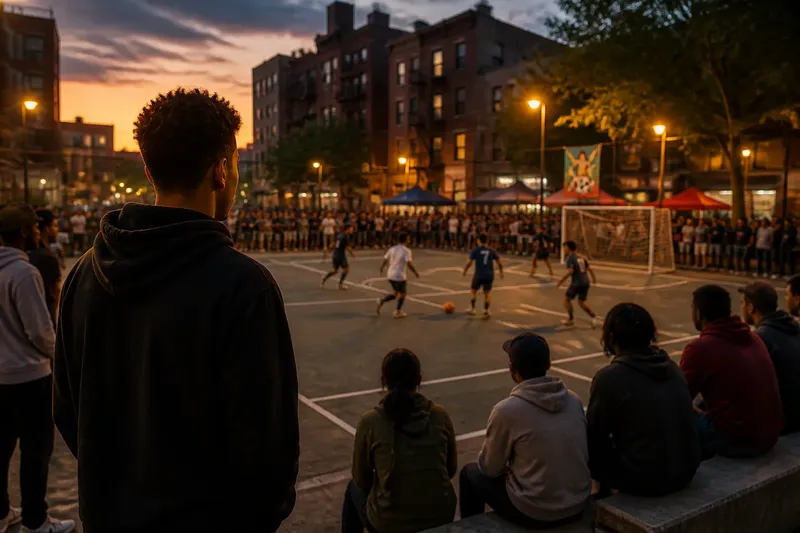
Say you have an afternoon errand nearby and want to watch a local soccer final without committing the whole day. You check the event’s public post, note the court entrance, and choose a spot near the edge of the audience rather than the busiest sideline. If the match starts late, you can watch the teams warm up; if the crowd gets dense, you can step away without having to cross the playing area.
Read the schedule for clues, not certainty
Look for more than the first start time. A useful event post may identify the sport, court or block, team names, game order, and whether the tournament uses one court or several. A bracket can help you understand which match follows, but an informal event may update it by hand or announce changes aloud.
Check the source closest to the organizers: a tournament account, a community group post, a flyer at the venue, or a message from the person who invited you. If details differ, ask a host or volunteer when you arrive rather than trying to infer the plan from an old repost. Keep the question simple: “Which game is on this court now, and what follows?”
For a first visit, the most useful schedule detail is often the location. A street tournament may occupy a plaza, schoolyard, recreation center, or park court, with other activity nearby. Confirm the correct entrance and look for a sign, banner, or cluster of spectators before assuming the nearest game is the one you came to see.
Find a viewing spot that suits your attention
Choose a place where you can see play without blocking it. The back or side of a loose crowd is often a comfortable starting point: you can watch the shape of the game, hear announcements, and move if people need room. At a small event, even a few steps can make a noticeable difference to everyone’s view.
If you care about tactics, look for a position that shows more of the court rather than standing directly behind a goal or basket. If you are there to enjoy the atmosphere, a spot near—but not inside—the gathering around the sideline may offer more conversation. Families or anyone who wants a calmer view may prefer an outer edge with a clear route away from the action.
Notice where players enter and leave, where officials or organizers stand, and whether spectators are expected to stay behind a boundary. Avoid setting a bag on a line, leaning on equipment, or taking a place that a player might need for a run-up. If the crowd shifts, follow its movement rather than insisting on a particular patch of ground.
Let the tournament’s rhythm guide your stay
Informal tournaments can move in pulses: a burst of play, a pause while teams sort themselves out, then another game. Use breaks to get water, check the next matchup, or simply watch how the gathering changes. Leaving a little unclaimed time is not poor planning; it keeps a flexible event from becoming a source of needless pressure.
When you want to leave, wait for a natural pause if you can, then take an open route around the audience. You do not owe anyone a long explanation. If you are with friends, agree on a meeting point in case one person steps away for a snack or needs to head home earlier.
Bring only what makes the visit easier: a water bottle, weather-appropriate clothing, and a phone for checking event updates or coordinating with a companion. A folding chair may suit a longer viewing session, but only if it will not crowd the walkway or the playing area. For access questions, ask the organizer about entrances, seating, or quieter viewing spots before you arrive.
What should you check before you go?
How do I know which game is happening?
Check the organizer’s latest post or ask a volunteer to confirm the current matchup and the next one. If the schedule is handwritten or announced aloud, treat the displayed order as a helpful cue rather than a fixed timetable.
Where should I stand if I am new?
Start at the edge of the audience, where you can see without standing in a player’s path. Watch how regular spectators position themselves, then adjust if the crowd or organizers indicate a preferred viewing area.
Is it awkward to arrive after a game starts?
Usually, arriving quietly at a pause is less disruptive than trying to slip through a packed sideline during play. If the crowd is too tight to enter comfortably, watch from an open outer edge or wait for a break.
Do I need to stay for the whole tournament?
No; decide on a natural stopping point, such as the end of a match or the next break. A short visit can still give you a feel for the players, the setting, and the event’s pace.
Keep your first visit easy to revise
A good first visit does not depend on knowing the bracket, choosing the perfect viewpoint, or staying for every game. Check the schedule and location, choose a spot that leaves others room, and give yourself permission to change plans as the tournament unfolds. That is the simplest way to enjoy a neighborhood street tournament: arrive curious, follow the local cues, and leave with enough ease to come back another day.